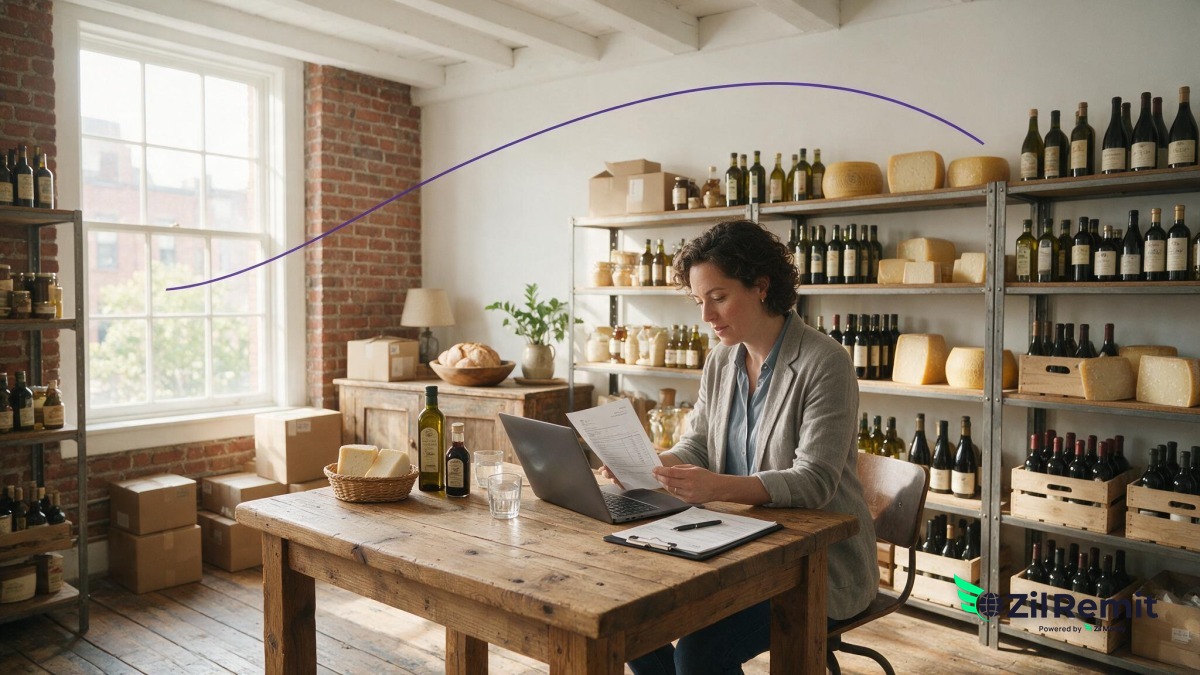
A specialty foods importer in Boston buying extra virgin olive oil from Puglia, aged Parmigiano Reggiano from Emilia-Romagna, or Chianti from a small estate in Tuscany deals with a different set of details than a business that trades in digital services. Every shipment has to clear US food-import rules on one side of the Atlantic and get paid on the other, and the two processes need to match up cleanly when tax season or a customs audit arrives.
Getting the payment details right is as important as sending the money itself. Here is what that actually looks like for a small food-import business paying an Italian supplier, and the recordkeeping habits that keep a growing supplier list from turning into a monthly scramble.
Key Insight: An Italian IBAN is always 27 characters: "IT," two check digits, one letter identifying the domestic bank code (the CIN), then 22 digits covering the bank, branch, and account number. If what a supplier sent you is shorter or longer than 27 characters, ask them to resend it before you pay, not after.
What to Collect From an Italian Supplier Before the First Payment
Before the first payment goes out to a new Italian producer or distributor, get four things in writing: the full 27-character IBAN, the BIC/SWIFT code for their bank, the exact legal name on the account, and an invoice number to reference. Ask for these in a document, such as a signed supplier form or a PDF invoice, rather than a phone call or a quick message. A specialty foods business often works with small family-run producers who may not have a dedicated finance contact, so it is worth double-checking the account name matches what appears on the producer's export paperwork and certificate of origin.
IBAN (27 characters)
Format: "IT" plus two check digits, one letter, then 22 digits. A mismatched or shortened IBAN routes to the wrong branch, not just to a delay, so confirm the full string before the payment goes out.
BIC/SWIFT code and bank name
Most Italian producers bank with a small regional institution rather than a large national bank. Confirm the BIC/SWIFT code directly with the supplier rather than guessing it from the bank's name.
Legal business name on the account
Many Italian food producers operate as a small "azienda agricola" (farm business) or family partnership, and the name on the bank account may read differently from the name printed on the label. Confirm both match before the first payment.
Invoice or purchase order number
Attach a reference to every payment so it can be matched back to a specific shipment of oil, cheese, or wine later, without digging through months of email threads.
Matching Every Payment to a Customs and FDA Record
Food imports carry a paperwork burden that most other goods do not. Under the Bioterrorism Act, the FDA requires advance Prior Notice for most food shipments entering the United States, filed before the goods arrive, separate from the standard customs entry a broker files with US Customs and Border Protection. A supplier payment, an invoice, a bill of lading, and the FDA Prior Notice confirmation should all reference the same shipment so a customs broker, a bookkeeper, or an FDA inspector can trace one document back to the others without extra questions.
Keep the certificate of origin and, where required, the producer's export health certificate alongside the payment confirmation. For a small importer bringing in cheese or cured products specifically, this pairing matters even more, since those categories draw closer scrutiny at the port of entry than shelf-stable goods like olive oil or wine.
If a customs broker asked to see the payment tied to last month's cheese shipment from Reggio Emilia, could you produce it in under a minute?
What to Check Before You Send the Payment
A platform built for sending international payments to Italy should let you review the full cost, the payment fee plus the USD-to-EUR conversion, before you confirm anything, so there are no surprises once the supplier checks their account. Zil Remit does not require pre-funding a foreign account either: payments go directly from your wallet to the recipient's bank, which matters for a food importer who may be paying five or six different producers across a single ordering cycle. Payments can reach major Italian banks, including Intesa Sanpaolo, UniCredit, and Banco BPM, which cover a large share of the country's regional producers.
The US-Italy trade relationship is large enough that these details matter at scale, not just for one shipment. The US Census Bureau recorded $74.4 billion in US goods imports from Italy in 2025, and food, wine, and specialty agricultural products are a consistent share of that trade. A small importer is one link in a much larger, well-established supply chain, which is exactly why the paperwork habits below are worth setting up early rather than fixing later.
Best Practices for Paying Italian Food Suppliers
Confirm the full 27-character IBAN in writing
Never take it over a phone call. A short or mistyped IBAN sends funds to the wrong branch.
Match the account name to the export paperwork
A producer's bank account name and its certificate of origin should read the same, especially for family-run "azienda agricola" suppliers.
Tag every payment with an invoice or shipment reference
This is what lets you trace a payment back to a specific pallet of cheese or case of wine without a lengthy search.
File the FDA Prior Notice confirmation with the payment record
Keep it next to the invoice and bill of lading so a customs broker can find the whole file in one place.
Review the total cost before confirming
Check the payment fee and the USD-to-EUR rate together, so you know what the supplier will actually receive.
Save verified suppliers as repeat recipients
Once an IBAN and account name are confirmed, reuse the saved details for the next order instead of re-entering them under deadline pressure.
Conclusion
Confirm the full IBAN and account name before the first payment. Tag every payment with a reference your bookkeeper and your customs broker can both use. Keep the FDA Prior Notice confirmation filed next to the payment record, not scattered across separate folders. Handle those three habits consistently, and paying an Italian food supplier stops being a monthly fire drill and starts running like any other vendor bill.
Ready to Pay Your Italian Supplier?
See how Zil Remit handles international payments to Italy for small businesses paying suppliers regularly.
Send Money to Italy