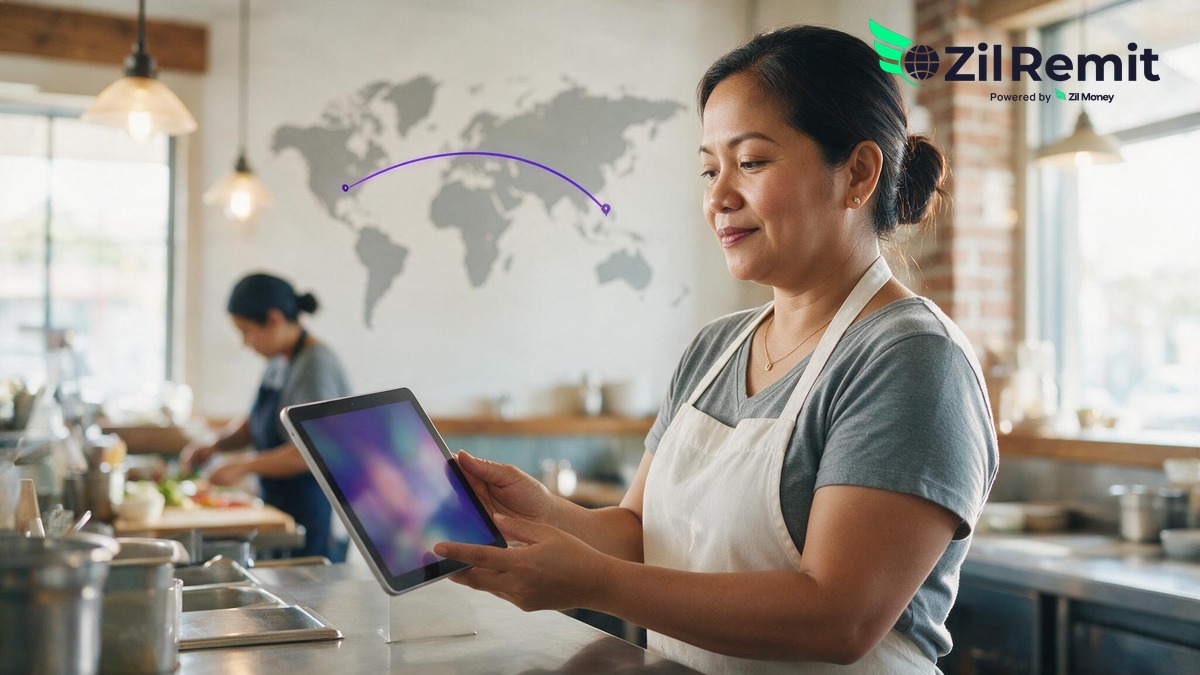
Ask a Filipino restaurant owner in Houston or a Vietnamese-owned nail salon in Dallas how they send money to the Philippines, and payday is rarely just one transaction. There is the US payroll run for the cooks, servers, or booth renters who show up every week. Then, on a different schedule, there is a payment sent to parents, siblings, or grown children back home. Two very different obligations, run by the same small business owner, out of the same bank account.
The two do not have to compete for attention. Once an owner treats the international payment as its own routine, separate from payroll but planned around the same cash flow, sending money home stops being the thing that gets squeezed in after everything else closes for the night.
Key Insight: Payroll and a remittance to family draw from the same account, but they are not the same transaction type, and treating them identically is where owners lose track of cash flow. Payroll is a fixed, recurring US obligation. A payment to the Philippines is a separate international transfer with its own recipient details, exchange rate, and confirmation record worth keeping apart from payroll paperwork.
Why This Comes Up So Often for Immigrant-Owned Businesses in Texas
Texas has a large and growing population of Filipino, Vietnamese, and other immigrant-owned small businesses, from family restaurants to independent salons and one- or two-crew contracting outfits. Many of these owners are the household's main link back home. That means a portion of what the business earns each month is committed before it ever reaches a personal account: rent, suppliers, weekly staff pay, and a transfer to relatives who are counting on it arriving.
Running US payroll itself is handled through a regular payroll or accounting system, not through an international payments platform. What Zil Remit fits into is the second half of that routine: getting the transfer to the Philippines out the door with the same predictability as payday, using a business account instead of a personal one so the transaction has a clear paper trail.
What You Need Before You Send Money to the Philippines
Sending a business payment to the Philippines takes the recipient's full name, their account number, and the receiving bank. Zil Remit sends directly to major Philippine banks, including BDO Unibank, BPI, and Metrobank, so a payment can go straight to a parent's or sibling's existing account at their own bank.
Recipient's legal name and bank
The name on the transfer should match the name on the receiving bank account exactly, including middle names if the account was opened with one. A name mismatch is a common reason a payment gets held for review.
Account number and bank branch
Ask for the account number in writing, not from memory over a phone call. A saved recipient profile means this step only has to happen once, and every future payment reuses the same verified details.
The exchange rate and total cost, before you confirm
Zil Remit shows the USD to PHP exchange rate and the total cost of the transfer upfront, before the payment is sent, so the amount that reaches the family member's account is known in advance rather than discovered after the fact.
How Small Business Owners Send Money to the Philippines From a Texas Account
For an owner running a business like this, the process fits into the same week as payroll, without needing a separate system:
Save the recipient once
Add the family member's name, bank, and account number to the business account so it does not need to be re-entered every time a payment goes out.
Send directly from the business wallet
The payment moves from the Zil Remit business wallet straight to the recipient's bank account. There is no need to pre-fund a separate foreign account first.
Review the rate, then confirm
Check the exchange rate and total cost before confirming, the same way you would review a payroll batch before releasing it.
Keep the confirmation separate from payroll records
File the transfer confirmation with the business's international payment records, not mixed into weekly payroll files, so a bookkeeper can tell the two apart at tax time.
Payroll vs. an International Payment: Two Different Jobs
| US Payroll | Payment to the Philippines | |
|---|---|---|
| Who it goes to | Staff on the US payroll system | Family member's Philippine bank account |
| Currency | US dollars only | Converted from USD to PHP at the rate shown before sending |
| Where it's handled | The business's regular payroll or accounting system | A business international payments account, sent directly to the recipient's bank |
| Record to keep | Payroll run summary | Transfer confirmation with recipient, rate, and amount sent |
| Tax treatment | Deductible business payroll expense | A personal transfer to family (an owner's draw), not a deductible business expense |
Sending directly from a business wallet to a recipient's account at BDO, BPI, or Metrobank keeps the payment on a direct path, and the total cost, fees plus the exchange rate, is shown before the payment is sent.
Questions Texas Business Owners Ask Before Their First Transfer
Can I send money to the Philippines from my business account instead of my personal account?
Using the business account instead of a personal one keeps the transfer on the same books as the rest of the company's international payments, which makes it easier to explain to a bookkeeper or accountant later.
Do I need to fund a Philippine bank account first?
The payment sends directly from the business wallet to the recipient's existing account at their bank, so there is no need to open or pre-fund a foreign account before sending.
What if I send money to more than one relative?
Save each recipient's details once. A business that supports a parent and, separately, a sibling's household can keep both profiles on file and pick the right one each time without retyping account numbers.
Does this affect how I run payroll for my staff?
Payroll for US-based staff stays in the business's existing payroll or accounting system, since the transfer to the Philippines is a separate, additional transaction that does not change how staff are paid.
Does sending money to family through the business account count as a business expense?
A payment to a family member is a personal transfer, sometimes called an owner's draw, even when it is sent from the business account. Keep it recorded separately from payroll and other deductible business expenses, and check with your accountant on how to log it for tax purposes.
Conclusion
Small business owners in Texas do not need two separate systems to keep both obligations moving. Payroll stays exactly where it already is, in the business's own payroll or accounting software. The payment to family in the Philippines gets its own saved recipient, its own rate check, and its own confirmation on file, sent directly from the business account to a real bank account at BDO, BPI, or Metrobank. Set it up once, and it becomes a routine part of the week rather than something to figure out under pressure.
Ready to Send Money to the Philippines?
See how Zil Remit sends business payments directly to BDO, BPI, and Metrobank accounts in the Philippines.
Send Money to the Philippines